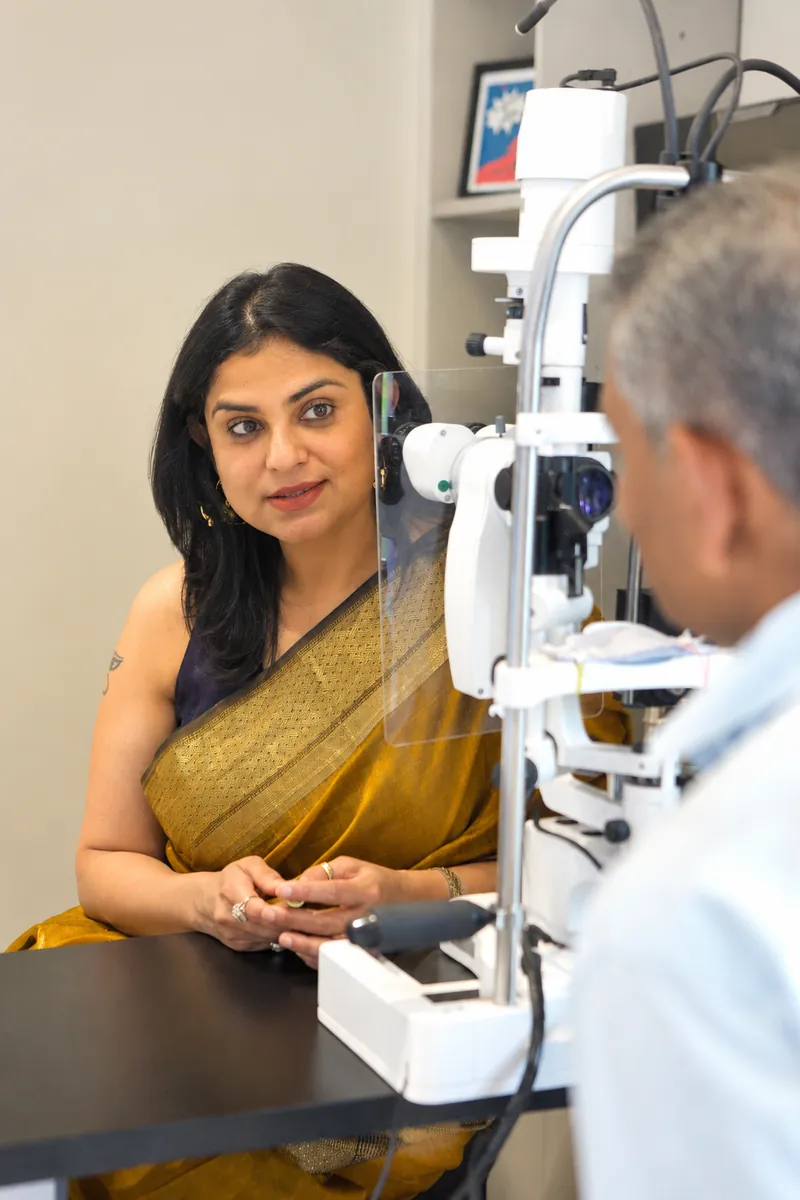
LASIK eye surgery in Delhi
LASIK can reduce or remove your need for glasses and contact lenses. I have performed refractive surgery since 2012, and every LASIK at Netram begins with a detailed evaluation to make sure it is safe for your eyes.

The procedure
What is LASIK?
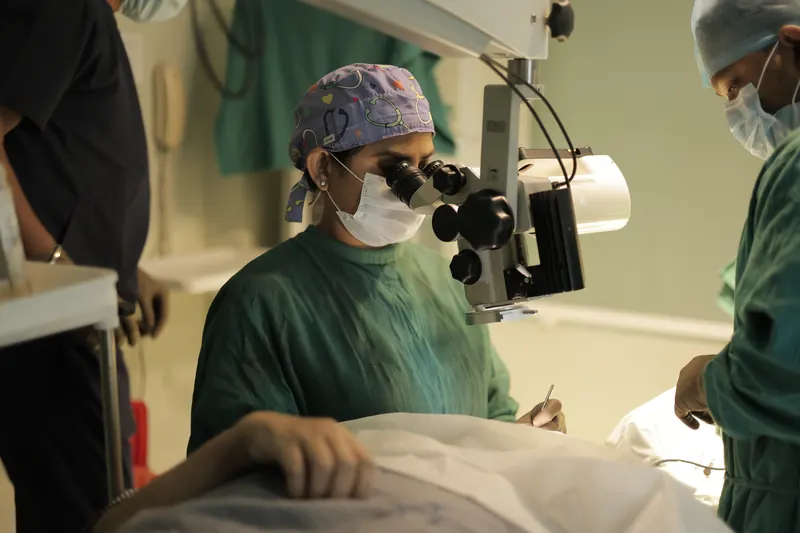
LASIK (laser-assisted in situ keratomileusis) reshapes the cornea, the clear front window of the eye, so that light focuses sharply on the retina. A thin flap is lifted on the surface of the cornea, an excimer laser reshapes the tissue underneath, and the flap is laid back, where it heals on its own without stitches.
- Corrects short sight (myopia), long sight (hypermetropia) and astigmatism
- About 10 to 15 minutes for both eyes, with numbing drops
- You go home the same day; most people see well within a day or two
- Done at Netram on a SCHWIND excimer laser platform
Suitability
Am I suitable for LASIK?
LASIK is safest when these are true. The evaluation checks each one with proper tests, not guesswork.
18 years or older
Your eyes should have finished growing. Most of my LASIK patients are in their twenties to forties.
Stable glasses power
Your power has not changed much for about a year, so the correction stays accurate.
A healthy, thick enough cornea
Measured with corneal tomography and pachymetry. Thin or irregular corneas need a different approach.
No active eye disease
Infections, uncontrolled dry eye, keratoconus or cataract are treated or ruled out first.
Not pregnant or breastfeeding
Hormonal changes can shift your power for a while, so we plan LASIK for afterwards.
Clear expectations
LASIK reduces dependence on glasses. After about 40, reading glasses may still be needed for close work.
Not suitable for LASIK? That doesn't mean you have to stay in glasses. An implantable lens is often the answer for high power or thin corneas: read about ICL and IPCL surgery, or compare the two in LASIK vs ICL.
Before surgery
Your pre-LASIK evaluation
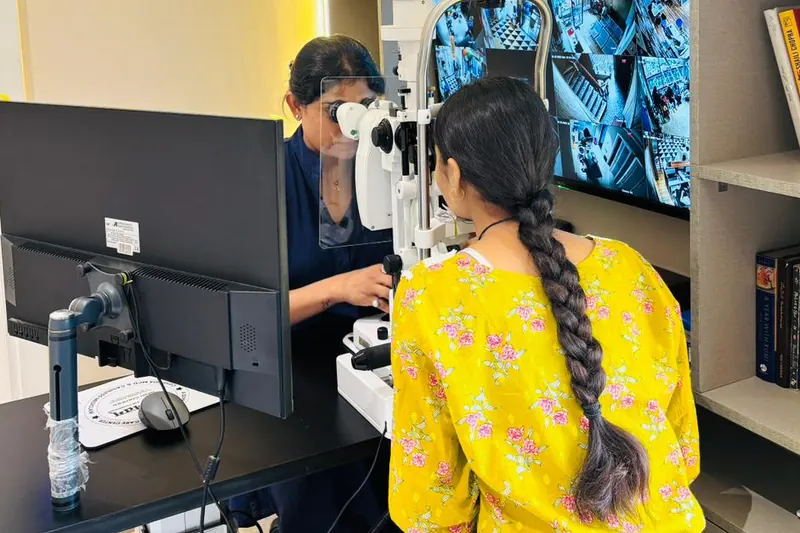
This visit decides whether LASIK is right for you, and which technique. It takes about two hours, as some tests need dilating drops.
History and glasses power
Your eye and health history, and an accurate measurement of your power, repeated with dilating drops where needed.
Corneal mapping
Topography and tomography map the shape of the cornea and rule out early keratoconus, which LASIK could worsen.
Thickness and tear film
Pachymetry measures corneal thickness; dry eye tests check that your eyes will heal comfortably.
Full eye health check
Eye pressure and a dilated retina examination, then a clear recommendation and a written estimate.
Contact lens wearers: stop wearing your lenses for some days before the evaluation, because lenses change the shape of the cornea. My team will tell you how long for your lens type when you book.
On the day and after
Surgery and recovery
- On the day: numbing drops, a few minutes per eye, and you rest for a short while before going home. Bring someone to drive you.
- First few hours: watering, mild stinging or a gritty feeling is normal. Keep your eyes closed and rest.
- Next day: your first check-up. Most people can already see well enough for daily routine.
- First weeks: use the drops as prescribed, don't rub your eyes, and avoid swimming and eye make-up for the advised period. Wear protective glasses outdoors.
- Follow-up: usually at one day, one week and one month, then as advised.
Cost
What does LASIK cost in Delhi?
The cost depends on the technique that suits your eyes, the tests and medicines included, and the follow-up care. Because the right procedure is decided at your evaluation, I give every patient a clear, written estimate at that visit, with no surprises later. Read what affects the cost of LASIK in Delhi.
Questions
LASIK FAQs
No. Numbing drops are used, so you feel light pressure but not pain during the procedure. For a few hours afterwards the eyes may water, sting or feel gritty; this settles quickly with the drops and rest.
The laser part takes only a few minutes, and the whole procedure is about 10 to 15 minutes for both eyes. Plan to spend two to three hours at the clinic on the day, including preparation and a check before you go home.
Many people return to desk work within two to three days. I will tell you what is right for your eyes at your follow-up visit. Swimming, contact sports and eye make-up need a longer break.
The reshaping of the cornea is permanent. Your eyes can still change with age, though: most people need reading glasses after about 40, and cataract can develop later in life, just as in eyes that never had LASIK.
Usually yes. Both eyes are commonly treated in one sitting; we confirm this at your evaluation.
You may still be able to stop depending on glasses. An implantable lens, ICL or IPCL, is often suitable for high power or thin corneas. The evaluation tells us which option is safest for you.
Like any surgery, it can. The most common effects are temporary dry eyes and glare or halos at night in the first weeks. Sometimes a small residual power needs an enhancement, and serious problems such as infection are rare. A careful evaluation and good aftercare keep these risks low.
At Netram, E-98 Greater Kailash-2, opposite the Gurudwara, New Delhi. Call 011-41046655 or WhatsApp 93199 09455 to book your evaluation.