LASIK and ICL both free many people from glasses and contact lenses, but they work in completely different ways. One reshapes the eye's surface with a laser; the other places a thin lens inside the eye. Here is how I help patients decide between them.
The short answer
If your glasses power is mild to moderate and your cornea is healthy and thick enough, LASIK is often the simplest option. If your power is high, your cornea is thin or irregular, or your eyes are dry, an implantable lens, ICL or IPCL, is usually the safer choice. The decision is made from measurements, not preference, which is why a detailed evaluation always comes first.
How LASIK works
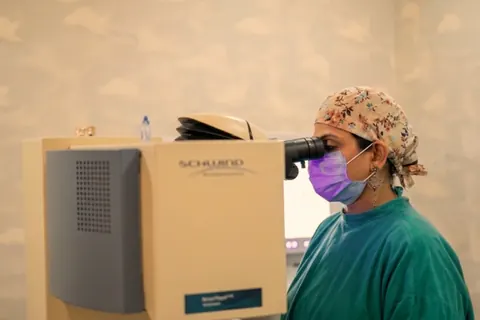
LASIK reshapes the cornea, the clear window at the front of the eye. A thin flap is created on the corneal surface, an excimer laser removes a precise, microscopic amount of tissue underneath to change its curvature, and the flap is replaced. The treatment takes about 10 to 15 minutes for both eyes, and most people see well within a day or two.
Because LASIK removes corneal tissue, the cornea must be thick enough and regular in shape. The higher your power, the more tissue is needed.
How ICL / IPCL works
An ICL (implantable collamer lens) or IPCL (implantable phakic contact lens) is a thin, flexible lens placed inside the eye, between the coloured iris and your natural lens. It corrects vision the way a contact lens does, but it stays in place permanently, can't be felt, and needs no daily care. No corneal tissue is removed, and the lens can be taken out or exchanged later if ever needed.
LASIK vs ICL side by side
| LASIK | ICL / IPCL | |
|---|---|---|
| How it works | Reshapes the cornea with a laser | Adds a lens inside the eye |
| Usually suits | Mild to moderate power, healthy cornea | High power, thin cornea, dry eyes |
| Corneal tissue | A small amount is reshaped | None removed |
| Reversible? | No | Yes, the lens can be removed |
| Time in surgery | About 10 to 15 minutes, both eyes | About 15 to 20 minutes per eye |
| Dry eye | Can be temporarily worse | Less affected (no corneal flap) |
| Long-term care | Routine eye check-ups | Yearly checks of eye pressure and the natural lens |
When LASIK is usually the better fit
- Your power is in the mild to moderate range
- Your corneal thickness and shape are normal on tomography
- You prefer a procedure that doesn't place anything inside the eye
When ICL / IPCL is usually the better fit
- Your power is high, beyond what laser can safely correct for your cornea
- Your cornea is thin, or its shape is irregular
- You have dry eyes and want to avoid a corneal flap
- You value an option that can be reversed later
ICL and IPCL also need enough space inside the eye and healthy corneal lining cells, so they are not right for everyone either.
How we decide at your evaluation
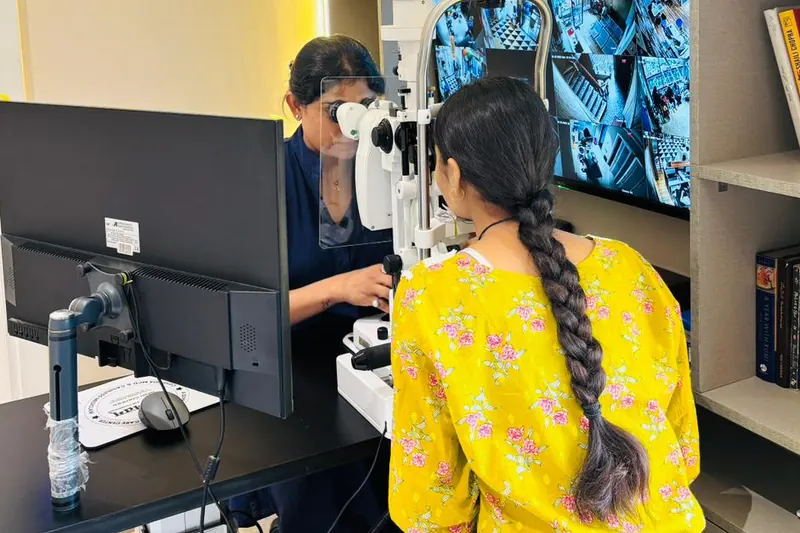
- Accurate glasses power, measured again with dilating drops where needed.
- Corneal tomography and thickness to see whether LASIK is safe and how much tissue it would need.
- Measurements of the inside of the eye, the chamber depth and width, if a lens is being considered.
- A count of the corneal lining cells and a full check of eye pressure and the retina.
With these results, I explain which options are safe for you, which one I would recommend and why, and give you a written estimate.
Common questions
Is ICL safer than LASIK?
Each is safe for the right eye. The risks are different: LASIK can cause temporary dry eyes and night glare, while an implantable lens needs monitoring of eye pressure and the natural lens over time. Choosing the procedure that matches your eye is what keeps risk low.
Is ICL more expensive than LASIK?
Usually yes, mainly because of the cost of the lens itself. Toric lenses for astigmatism cost more than standard ones. See what affects LASIK cost.
Can I get ICL if I was told I'm not fit for LASIK?
Often, yes. That is exactly the group ICL and IPCL were designed for, provided the measurements inside the eye are suitable.
Next step
The only way to know which option suits you is a proper evaluation. Learn more about LASIK and ICL / IPCL surgery at Netram, or book a consultation in Greater Kailash-2.
MBBS, MS Ophthalmology, FVEIRC. Cornea and refractive surgeon since 2012, founder of Netram, Greater Kailash-2, New Delhi. About me
This article is general information, not a diagnosis. Every eye is different; please book an examination for advice about your own eyes.